



How Often Should Dogs Really Be Groomed?
July 3, 2026
Most dogs need professional grooming every four to eight weeks, but the honest answer depends on your dog’s coat, lifestyle and the time of year. A short-haired Staffy and a curly-coated cavoodle live in the same city and have completely different grooming needs.
This guide breaks down how often to groom by coat type, what changes the schedule, and how to tell when your dog is overdue, so you can keep them comfortable rather than guessing.
Why Grooming Frequency Actually Matters
Grooming is easy to think of as a haircut, but for most dogs it is closer to basic maintenance. Regular sessions keep the coat free of matting, catch skin issues early, and keep nails at a length that does not affect how your dog walks. Leave it too long and small problems become uncomfortable ones. Matting pulls on the skin, overgrown nails strain the joints, and a neglected coat traps dirt and moisture against the skin.
Getting the timing right is not about appearances. It is about keeping your dog comfortable between visits and spotting anything unusual before it turns into a vet trip.
How Often to Groom by Coat Type
Coat type is the single biggest factor. Here is a realistic guide for the coats we see most often across Melbourne:
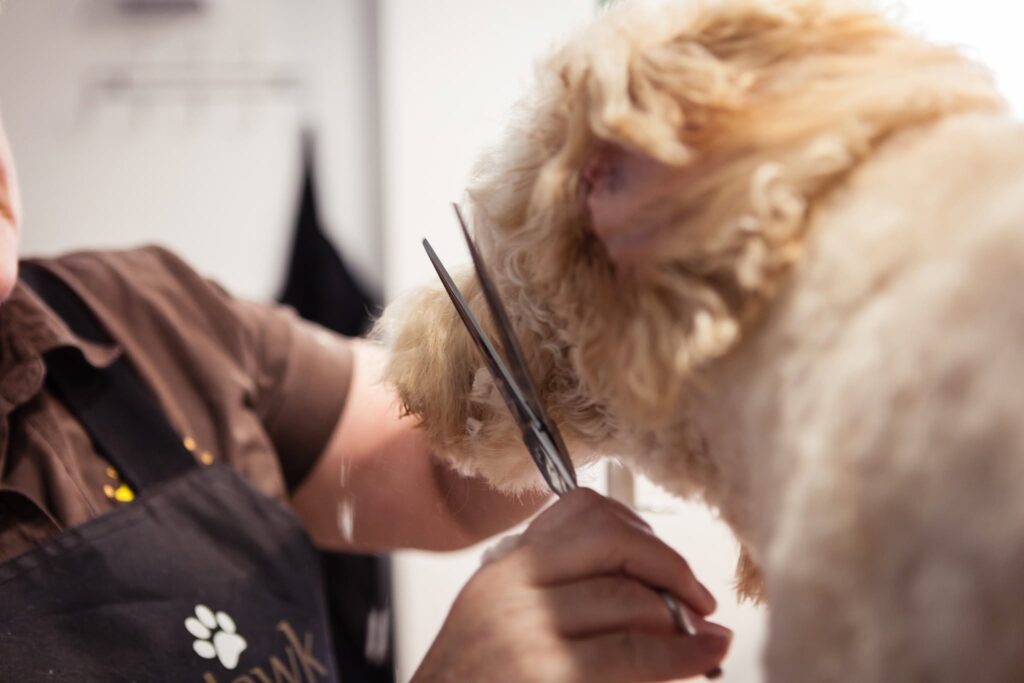
– Long or curly coats (oodles, poodles, spaniels): every four to six weeks. These coats grow continuously and mat quickly, so they need the most consistent schedule of any dog.
– Double coats (retrievers, huskies, shepherds): a full groom every eight to twelve weeks, with seasonal de-shedding in spring and autumn when the undercoat blows. Regular brushing between visits does most of the work here.
– Short coats (staffies, beagles, kelpies): every six to eight weeks is plenty. A bath, brush and nail trim keeps the skin healthy without much fuss.
– Wiry or terrier coats: every six to eight weeks, sometimes with hand-stripping depending on the breed and whether the coat is kept natural.
Age and lifestyle shift these numbers. A dog that swims, digs and hikes will need more frequent grooming than a mostly-indoor companion of the same breed.
What Else Changes the Schedule
Coat type sets the baseline, but a few things move it:
Season. Melbourne’s shift from a wet winter to a hot summer changes coat behaviour. Double coats shed heavily in the warmer months, and matted or overgrown coats trap heat when your dog can least afford it.
Activity level. Dogs that stay active through regular walks and outdoor play pick up more dirt and debris, and need dog grooming more often to keep the coat clean and tangle-free.
Skin sensitivity. Dogs prone to itchy skin or allergies often do better on a slightly more frequent, gentle schedule than their coat type alone would suggest.
Age. Senior dogs can find long sessions tiring, so shorter, more regular visits are kinder than one big overdue groom.
Signs Your Dog Is Overdue
You do not need a calendar to know when a groom is due. Your dog will tell you. Watch for a coat that feels rough or clumps when you run your hand through it, small mats forming behind the ears or under the legs, a lingering smell that a bath does not fix for long, or nails you can hear clicking on the floor. Scratching, licking or chewing at one spot can also mean the coat needs attention.
If you are seeing two or three of these, your dog is past due rather than approaching it.
Can You Over-Groom a Dog?
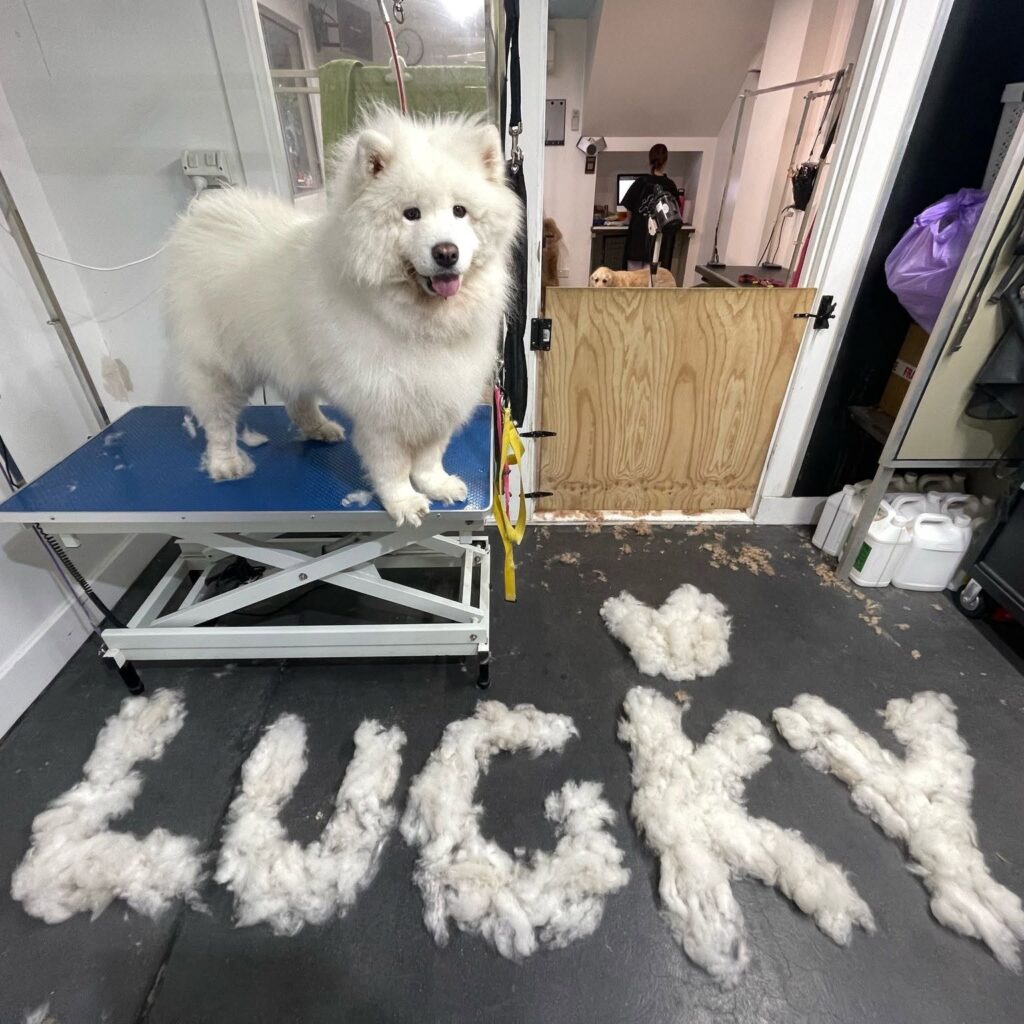
Yes, and it is worth saying plainly, because more is not always better. Bathing too often can strip the natural oils that keep skin and coat healthy, leaving the skin dry and itchy. Some coats, particularly double coats, are also easy to damage if they are clipped when they should be brushed and de-shedded instead.
The goal is the right schedule for your dog, not the most frequent one. A good groomer will tell you honestly if you are booking too often, not just take the booking.
A Calmer Grooming Experience at Woofers World
Where your dog is groomed matters as much as how often. At Woofers World, grooming happens in a free-range grooming salon designed to be calm and low-stress, rather than a row of crates. For nervous dogs, and for the seniors who find the whole thing tiring, that difference shows in how they settle.
Every groom includes nail trims and ear cleaning as standard, with no surprise extras added at pickup, and each dog is handled by trusted carers who have looked after Melbourne dogs since 2005. If your dog is due, or you are not sure how often their coat really needs attention, the team is happy to talk it through and set a schedule that suits your individual dog.
The Bottom Line
Most dogs land somewhere between four and eight weeks, with curly and long coats at the frequent end and short coats at the relaxed end. Use coat type as your starting point, adjust for season, activity and age, and let your dog’s coat and behaviour guide the rest. Get the rhythm right and grooming stops being a chore you keep putting off, and becomes simple maintenance that keeps your dog comfortable all year.

Frequently Asked Questions About Dog Grooming Frequency
How often should a dog be professionally groomed?
Most dogs need a professional groom every four to eight weeks. Long and curly coats sit at the four-to-six-week end, while short coats can stretch to eight.
How often should I groom a short-haired dog?
Short-coated dogs usually need a bath, brush and nail trim every six to eight weeks. Regular brushing at home in between keeps shedding and skin healthy.
Do dogs need grooming in winter?
Yes. Coats still grow, mat and trap moisture in winter, and skipping the colder months often leads to matting that is uncomfortable and harder to manage by spring.
Can you groom a dog too often?
You can. Bathing too frequently strips natural oils and can dry out the skin, so the right schedule for your dog’s coat is better than the most frequent one.
How do I know if my dog needs grooming?
Rough or clumping coat, small mats behind the ears or under the legs, a smell that returns quickly after a bath, and nails clicking on the floor are all signs a groom is due.
Related Articles
How To Choose A Dog Walker in Melbourne
Beyond the photos and the advertised walk time, a few questions tell you how a dog walking service really operates. Here is what to ask before you ...

Proudly Associated With