


Choosing someone to walk your dog is a big decision
For many dogs, a walk isn’t simply about getting some exercise. It’s an opportunity to explore, sniff, socialise and spend some time away from home doing something enriching and enjoyable. When someone else is responsible for your dog during that time, it’s natural to want to know that they’re in safe, capable and experienced hands.
There are plenty of dog walking services available, so it can be difficult to know what to look for. Beyond the photos and the advertised walk duration, there are a few things that can give you a better understanding of how a service operates and what your dog’s experience is likely to be.
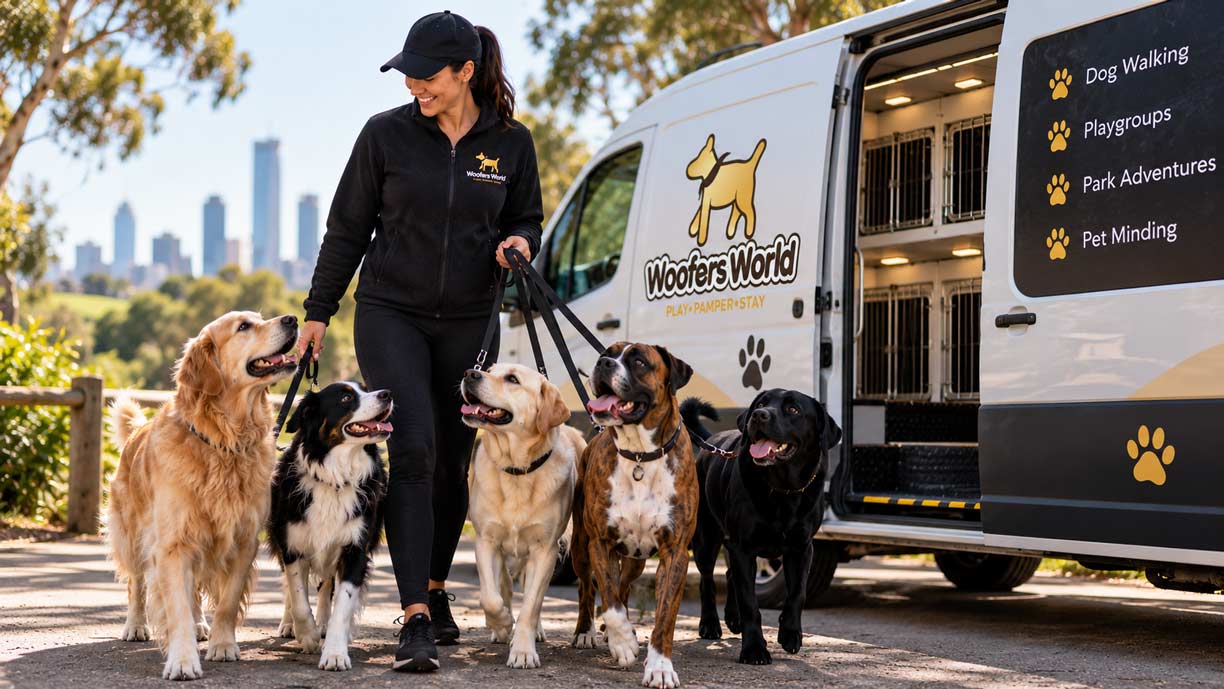
Handler Experience, Training and First Aid
A genuine love of dogs is a great place to start, but professional dog handling involves so much more than that. When choosing a dog walker, it can be helpful to ask about the experience and training of the people who will be caring for your dog.
Handlers should have a solid understanding of animal welfare, safe handling, husbandry and the relevant Codes of Practice relating to the keeping and care of animals.
Practical experience is important, but so is theoretical knowledge. Understanding why dogs behave the way they do can help handlers make better decisions when managing groups, introducing new dogs and responding to unexpected situations.
It’s also worth asking whether handlers participate in ongoing professional development. Animal care is an area where there is always more to learn, and continuing education helps handlers keep developing their knowledge and skills.
Animal first aid training is another valuable and extremely important consideration. Whilst we’d all hope it is never needed, knowing that your dog’s handler has the knowledge and training to respond appropriately in an emergency can provide an additional level of reassurance.
What a Dog Walking Van Should Have
If your dog is travelling with a walking service, the vehicle becomes part of their experience too. A well equipped dog walking van should be secure, comfortable and designed specifically with animal transport in mind.
Features worth looking for can include:
- Secure physical barriers between dogs
- The ability to separate dogs when necessary
- Additional air conditioning
- Insulated walls and flooring
- Non-slip flooring
- Durable surfaces suitable for regular cleaning
- A layout that allows handlers to safely access the dogs
Hygiene is particularly important when several dogs share a vehicle.
Purpose designed rubber flooring, including curved edging that minimises difficult to clean joins and corners, can make thorough cleaning and disinfection much easier. Reducing the area that dirt, hair and contaminants can collect is an important part of good hygiene and reducing the risk of disease transmission between animals.
A consistent and high quality cleaning routine is an important part of maintaining a healthy environment for every dog travelling in the vehicle.
Insurance for Dog Walking Services
It can also be worthwhile asking what insurance a dog walking business carries. Public liability is an important part of operating a professional business, but businesses caring for animals should also have additional cover relating to the animals in their care. Care, custody and control cover is one example.
Nobody expects anything to go wrong, but knowing that appropriate insurance is in place can give you some extra peace of mind when you’re entrusting someone with a much loved member of your family.
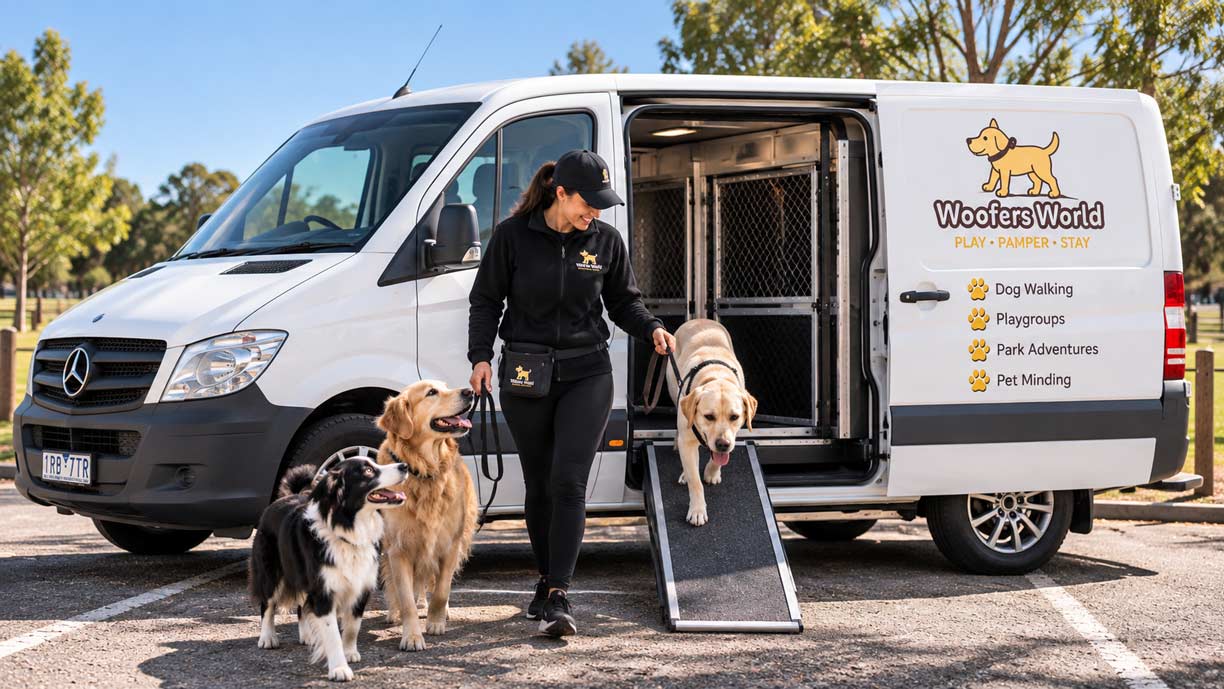
How Dogs Are Matched Into Groups
Perhaps one of the most important questions is how a service decides which dogs walk together. Every dog is different.
Some are energetic and playful. Others prefer a slower pace. Some love socialising with other dogs, while others are happier with a little more space.
For that reason, a good group isn’t necessarily the largest group. Smaller groups can allow handlers to consider each dog’s temperament, energy level and social style when creating a group.
A group with a smaller number of compatible dogs can provide wonderful opportunities for socialisation and play whilst still allowing the handler to give each dog individual attention. This is the thinking behind our social dog groups in Melbourne, where dogs are placed by temperament and size rather than by how many spaces are left.
Ideally, dogs are matched because they are a good fit for one another, rather than purely because they live in the same vicinity.
The Meet and Greet and Assessment Walk
An assessment walk and a meet and greet is an important part of the introduction process.
It gives the handler an opportunity to meet your dog, learn about their personality and observe how they react to different situations. It will also help determine which existing group is likely to suit them best.
Often a new dog will be introduced to an established group with additional support from another handler. This gives the dog time to settle in with the undivided attention of a handler, without immediately expecting them to navigate an entirely new experience on their own.
The aim is to make the process as seamless, comfortable and as positive as possible.
Walk Quality Over Walk Duration
When comparing dog walking services, it’s easy to focus on how long your dog will be “out”. But the number of hours doesn’t necessarily tell you how enriching the experience will be.
A dog’s day can include travel, pick up and drop off time, as well as the walk itself. This is why we think it is more useful to consider what your dog is actually experiencing during their outing, rather than focusing solely on the amount of time they’re away from home.
For some dogs, a shorter, more thoughtfully planned adventure with the right group can be much more valuable than a longer outing spent travelling between numerous suburbs. That is how our group dog walking adventures are put together, with the ground chosen to suit the dogs in the van that day.
The goal is to make the time count. That might mean plenty of sniffing and exploration, social interaction, active play, or simply enjoying the environment at a pace that suits the group.
Service Area and Travel Time
The area a dog walking business covers can make a difference here too. A service that works within a defined area can generally keep collection and drop off routes more efficient. Less time spent travelling means more of the day can be dedicated to the dogs themselves. It is worth checking the Melbourne suburbs a walking service actually covers before you book, rather than assuming your street is on the run.
It also allows handlers to become familiar with their local area and build relationships with other pet professionals, including local vets, groomers and trainers. Ideally, a dog walking business should have veterinary and dog training connections within the areas they service.
Group Management on the Walk
Walking multiple dogs requires more than simply holding several leads. Handlers need to understand group dynamics and recognise how individual dogs influence one another. Energy can build within a group, and different combinations of dogs can create very different dynamics.
A skilled handler should be observing the group throughout the outing and adjusting their approach according to what the dogs need. This is another reason why smaller, carefully matched groups are beneficial. The aim isn’t to give every dog the exact same walk.
It is to create an outing that works for the dogs as a group, while still recognising them as individuals.
Team Support Behind the Handler
A dog walking business might look like one handler and a van from the outside, but having a reliable support network behind that handler can make a significant difference. Unexpected things can happen.
A vehicle can have a problem. A handler can fall ill. A dog may require some additional attention during an outing.
Having colleagues who can assist with pickups, drop offs or other unexpected situations helps create a more resilient service. It also means the handler isn’t required to manage every situation completely alone.
How Communication Should Work
Your dog’s handler will be focused on your dog while they’re out, which is exactly where their attention should be. That means they may not be able to answer a call or message immediately. Having a dedicated coordinator can be a useful way of making sure clients still have someone available for general enquiries, bookings and scheduling whilst handlers remain focused on the dogs.
At the same time, it is important that feedback about your dog during their walk is communicated consistently. If a handler notices something unusual, has a concern or learns something useful about your dog’s behaviour or preferences, it is important that information makes its way back to you.
Staff Continuity and Leave Cover
The people caring for your dog need time off too. A well run business should have systems around annual leave, illness and staff availability so that handlers can take proper breaks without leaving clients without support.
Having a wider team and clear processes can help provide continuity for dogs and their families whilst also allowing handlers to maintain a healthy work life balance.
Matching the Service to Your Dog
Perhaps the most important consideration is whether the service is actually suited to your dog. Think about your dog’s personality.
Do they like other dogs? Are they nervous in new environments? Are they energetic? Do they prefer a slower walk? Are they young and still learning about the world? Are they older and more comfortable at a gentler pace?
There isn’t one perfect type of dog walk. The “right” outing is the one that suits the individual dog. For dogs who are nervous, reactive, elderly or recovering, a private dog walk tailored to their pace will usually do more for them than any group session.
Whether that means a one-to-one outing or a small social group is worth thinking through before you book, and our guide to private dog walking versus group walks covers which dogs suit each.
A professional handler should be interested in getting to know your dog and understanding what makes them comfortable, happy and engaged.
What a Dog Walker Does Not Do
A dog walking service provides exercise, enrichment, supervision and care.
Whilst an experienced handler may have a good understanding of canine behaviour, dog walking isn’t the same as professional dog training.
If your dog has specific behavioural concerns or training needs, a qualified trainer or behaviouralist may be recommended alongside your walking service. Melbourne Dog Trainers handle that side for our clients.
Knowing what each professional is there to provide helps ensure your dog gets the right support from the right people.
Questions Worth Asking Before You Book
When choosing a dog walking service for your dog, don’t be afraid to ask questions. Find out about the people who will be caring for your dog, how they’re trained, how dogs are introduced and matched, what the transport is like, how groups are managed and what support exists behind the scenes.
Most importantly, consider whether the service seems genuinely interested in your dog as an individual. Ultimately, dog walking isn’t just about getting your dog from home, to the park and back again.
It’s about giving them the chance to explore, experience, socialise, move, sniff, learn and enjoy themselves, safely and in a way that suits who they are and what their preferences are.
FAQs About Choosing a Dog Walker
How do I choose a dog walker?
Ask about handler experience, training and animal first aid, how dogs are matched into groups, what the vehicle is like, what insurance is carried, and what support exists if a handler or van is unavailable. A service that answers those clearly, and asks questions about your dog in return, is usually the one worth booking.
How many dogs should one dog walker take at once?
Smaller groups allow a handler to watch each dog properly and adjust as the dynamic changes. A large group with one handler makes individual attention difficult and group management harder. Ask for the number rather than assuming, and ask how the dogs in that group were matched.
How long should a dog walk be?
Duration matters less than what happens during it. Advertised time often includes travel, pick-up and drop-off, so a shorter, well-planned outing with a suitable group can be more enriching than a longer one spent driving between suburbs. Ask what your dog will actually be doing, not just how long they will be out.
What insurance should a dog walker have?
Public liability is the baseline for any professional business, but a service caring for animals should also carry cover relating to the animals themselves, such as care, custody and control. It is a fair question to ask before booking and a professional service will answer it without hesitation.
Should a dog walker meet my dog before the first walk?
Yes. A meet and greet and an assessment walk let the handler learn your dog’s personality, see how they respond in different situations, and work out which existing group suits them. New dogs are often introduced with a second handler on hand so they are not navigating everything alone.
Is a dog walker the same as a dog trainer?
No. Dog walking provides exercise, enrichment, supervision and care. An experienced handler will understand canine behaviour, but behavioural concerns and training goals are the work of a qualified trainer or behaviourist alongside your walking service.
One on One or Group Dog Walks
Group walks suit social, high-energy dogs who thrive on company and need to burn off real energy. Private walks suit dogs who are nervous, reactive, elderly, recovering from injury, or simply prefer their own pace. Neither is better as a rule. The right answer depends entirely on your individual dog.
This guide covers what actually separates the two, which dogs do better in each, and how to tell if you have your dog in the wrong one.
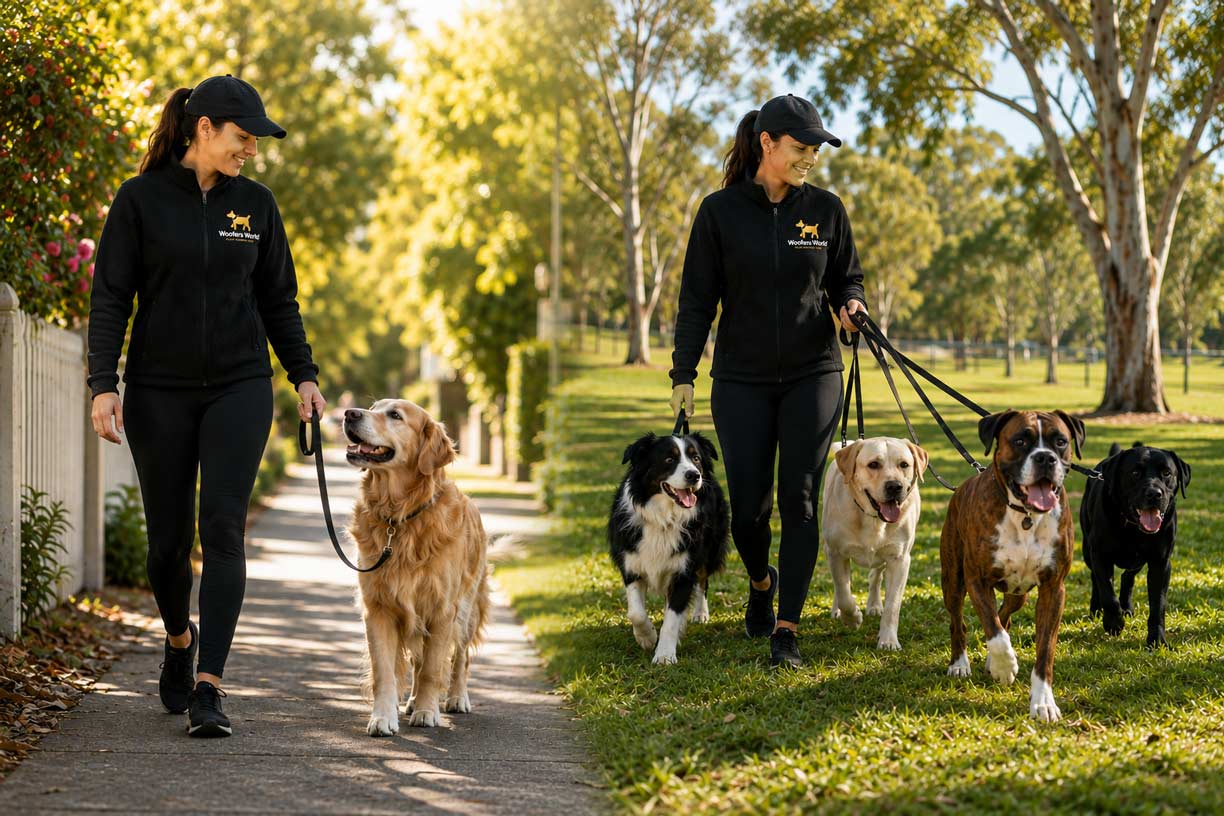
What a Private Dog Walk Involves
A private walk is your dog and the handler, nobody else. That means the whole session runs at your dog’s pace, on the route your dog likes, with the handler’s full attention.
Because there is no group to keep together, a private walk can be shaped around almost anything. A slow sniff-heavy amble for a senior dog. A hard run for a working breed with too much energy and no outlet. On-leash neighbourhood work for a dog still learning manners. Some owners use the session for a mix, part walk, part backyard play, part quiet company.
Private walks also suit dogs who cannot safely be around other dogs. A reactive dog does not need to be fixed before they can be exercised, they just need a handler working with them one to one.
What a Group Walk Involves
Group walks put your dog with a small number of compatible dogs and one handler. Woofers runs these as either playgroups, which are the shorter social sessions, or park parties, which run two and a half to three hours and cover more adventurous ground.
The value of a group walk is not the walking. It is the company. Dogs are social animals, and for a dog who genuinely enjoys other dogs, an hour with the pack does something a solo walk cannot. They come home properly tired, mentally as well as physically, because they have spent the session reading other dogs rather than just covering distance.
Groups are matched on temperament, energy and size rather than filled to capacity. A nervous small dog does not get put in with four boisterous adolescents, because that helps nobody.
Which Dogs Do Better in a Group
Group walks work well for dogs who:
- Actively seek out other dogs at the park rather than avoiding them
- Have energy left after a normal walk and get restless or destructive at home
- Are young, fit and looking for stimulation as much as exercise
- Have solid recall and reasonable manners on and off leash
- Live alone and get little dog contact during the week
The clearest sign a dog belongs in a group is what they do when they see another dog on the footpath. If the tail goes and the body loosens, they will get more out of a group than they will out of a solo lap of the block. Format is only half the decision. What to ask about handler training, group matching and transport is covered in our guide to how to choose a dog walker.
Which Dogs Do Better One to One
Private walking is the better call for dogs who:
- Are reactive, fearful or dog-selective, whether on leash or off
- Are elderly, arthritic or recovering from surgery and need a controlled pace
- Are very young or very small and would be overwhelmed by a group
- Have medical needs, medication timing or mobility limits
- Have never been socialised and would find a group frightening rather than fun
- Simply find other dogs stressful, which is common and not a fault
There is no hierarchy here. Plenty of perfectly happy dogs just do not enjoy other dogs, and forcing the issue with group sessions usually makes it worse.
Signs Your Dog Is in the Wrong One
Dogs are honest about this if you watch them.
A dog in a group who does not want to be there will hover near the handler, keep their body low and tight, avoid eye contact with the other dogs, or come home wired and unsettled rather than tired. Some start refusing the van.
A dog on private walks who should be in a group will pull hard toward every dog they pass, whine at the fence, get destructive at home despite daily exercise, or return from a walk with energy still to spare.
The other thing to watch is the recovery. A well-matched session leaves a dog settled within an hour of getting home. If yours is still pacing at dinner time, something about the format is not right.
Cost, Time and Practicality
Private walks cost more per session because the handler’s time is not shared. Group walks give you longer out of the house for less, which matters if your dog needs a lot of exercise on a working day. You can compare the current rates for private walks and group adventures before you decide.
Duration is the other practical difference. A private walk is usually shorter and more flexible on timing. A park party runs two and a half to three hours including pick-up and drop-off, so it takes a bigger bite out of the day, which is exactly what some dogs need.
Many owners end up mixing both. A group session midweek for the social side, a private walk on the days your dog needs something calmer or you need a specific time slot.
Getting the Match Right at Woofers World
Getting this decision right is easier when someone has watched your dog with other dogs before recommending anything.
Woofers has been walking Melbourne dogs since 2005, and every dog is assessed on temperament before being placed anywhere. Our private dog walking service covers one-to-one outings tailored to pace, age and ability, with pick-up and drop-off included. For social dogs with energy to spare, our group dog walking and park party adventures run small groups of four to six dogs matched by temperament, with a trained animal handler on every session and vans fitted with fresh water and a wash system for the muddy ones.
If you are not sure which fits your dog, say so when you book. The team would rather start your dog in the right format than move them after a session that did not suit.
The Bottom Line
Match the format to the dog, not to what sounds better on paper. Social, energetic dogs get more out of a group. Nervous, senior, reactive or recovering dogs get more out of a private walk. Watch how your dog behaves around other dogs and how they settle afterwards, and they will tell you which one they need. Get it right and the walk stops being a box you tick and becomes the best part of your dog’s day.
FAQs About Private and Group Dog Walking
Is private dog walking better than group walks?
Neither is better overall. Private walking suits nervous, reactive, senior or recovering dogs who need a controlled pace and full attention. Group walks suit social, high-energy dogs who benefit from company as much as exercise. The right choice depends on your individual dog’s temperament rather than on which service costs more.
How much exercise does my dog need each day?
Most adult dogs need somewhere between thirty minutes and two hours a day, depending on breed, age and fitness. Working breeds sit at the high end, flat-faced and senior dogs at the low end. Mental stimulation counts toward it, which is why a sniff-heavy group adventure often tires a dog more than a longer walk on familiar streets.
Can a reactive dog join a group dog walk?
Usually not, and that is not a reflection on the dog. A reactive or dog-selective dog placed in a group tends to get more reactive rather than less, because the situation is stressful rather than instructive. Private walks give them proper exercise without the trigger, and a behaviourist is the right next step if you want to work on the reactivity itself.
How many dogs are in a group dog walk?
Woofers runs small groups of four to six dogs, matched by temperament, energy level and location rather than filled to a number. Large commercial group walks with a dozen dogs and one handler are a different service entirely, and the supervision does not compare.
Are group dog walks safe?
They are when the group is matched properly and supervised by a trained handler who monitors interactions, watches the environment for hazards and practises recall throughout. What makes a group walk unsafe is poor matching and too many dogs per handler, not the format itself.
Do dog walkers pick up and drop off?
Woofers includes pick-up and drop-off on both private walks and group adventures, along with a water check and a security check of your home before we leave. You get a calling card showing what time we were there and where your dog went.
For your dog’s first day at daycare, pack their food, any medication, a familiar item that smells like home, and proof of up-to-date vaccinations. Most of what makes day one go smoothly, though, isn’t in the bag. It’s knowing what to expect and how to set your dog up to settle in fast.
This guide runs through exactly what to bring, what to leave at home, and how to make a first daycare day calm rather than chaotic, so your dog walks in ready to enjoy it.
Before Day One: The Paperwork That Matters
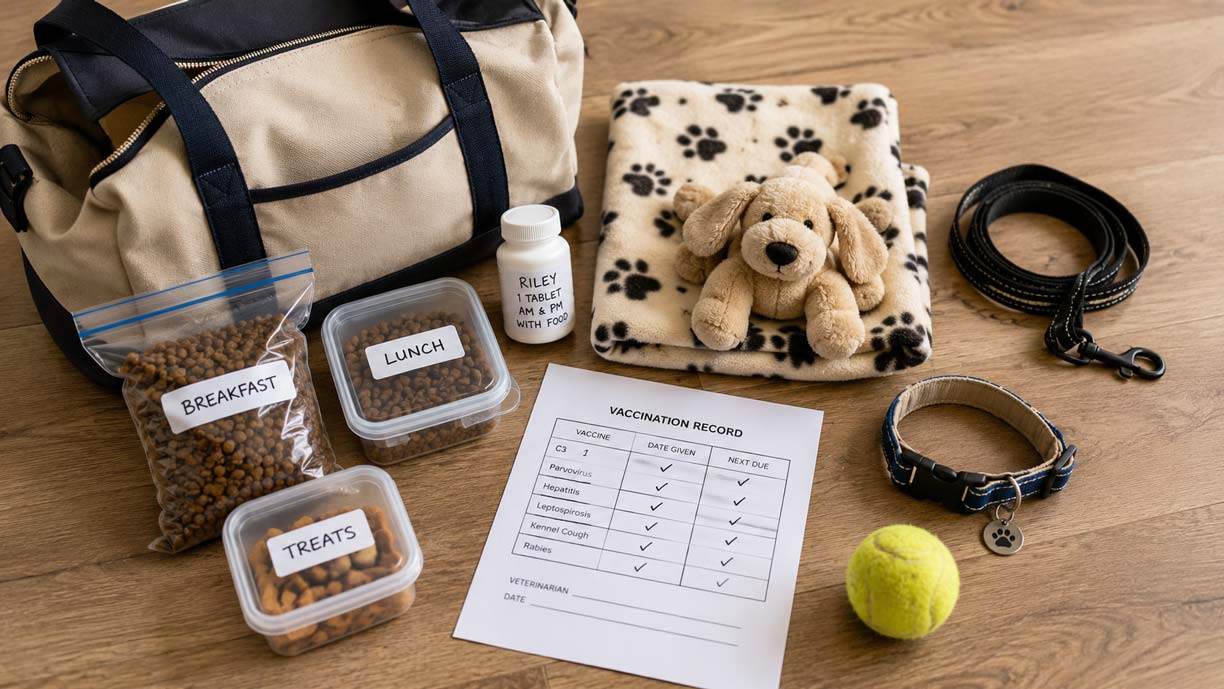
The single most important thing to bring is proof your dog is up to date with vaccinations. Every reputable daycare requires it, and for good reason: it keeps every dog in the group safe. At Woofers, all onsite dogs must be vaccinated, so your dog is only ever mixing with others held to the same standard.
If your dog is on any medication, bring it clearly labelled with dosage instructions. And if they’ve had a temperament assessment or trial, have those details handy so the team knows your dog before they walk in.
What to Pack for Your Dog’s First Day
Keep it simple. A short, practical list beats an overstuffed bag your dog doesn’t need. Here’s what actually earns its place:
- Food and treats. Pre-portioned meals following your dog’s normal schedule, so their routine doesn’t change on an already big day.
- Any medication. Clearly labelled, with clear dosage and timing instructions.
- A familiar comfort item. A blanket or toy that smells like home can help an anxious dog settle in a new space.
- A well-fitted collar with ID. Council ID tags on, and make sure the collar is secure and comfortable.
- Proof of vaccinations. If you haven’t already sent it through, bring a copy on the day.
That’s the core kit. Water bowls, bedding and toys for the group are provided, so there’s no need to pack your whole house.
What to Leave at Home
A few things do more harm than good on a first day. Skip the favourite high-value chew or bone, which can trigger guarding behaviour in a group setting. Leave expensive or fragile toys at home too, since anything that goes into a play environment might not come back in one piece. And go easy on an emotional, drawn-out goodbye. Dogs read our nerves, and a calm, brief drop-off tells them there’s nothing to worry about.
Setting Your Dog Up for a Calm First Day
What you bring matters less than how you arrive. A little energy burned off beforehand helps, so a short walk on the way in takes the edge off. Keep the drop-off relaxed and confident rather than lingering. Dogs settle faster when their owner’s exit is matter-of-fact.
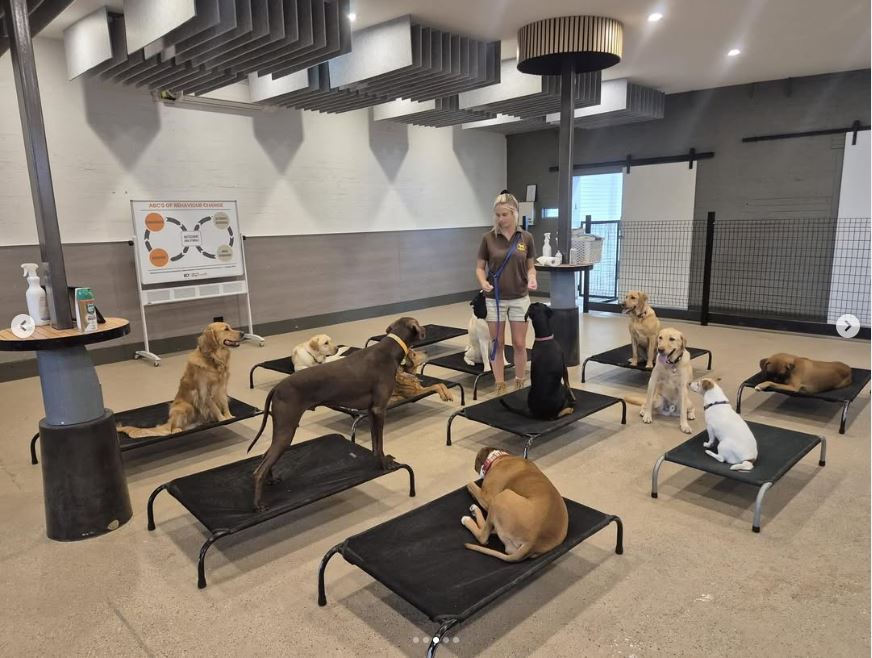
It also helps to choose a daycare that assesses temperament and groups dogs thoughtfully rather than lumping them all together. At Woofers, dogs are grouped by size and temperament and supervised throughout the day by trusted handlers who read canine body language and step in before play tips over. A structured day with a balance of play and rest means your dog comes home happily tired rather than overstimulated.
What Happens on the Day
Knowing the shape of the day takes a lot of the worry out of it. While every daycare runs a little differently, a good first day tends to follow the same rhythm.
Your dog arrives and is greeted calmly, then eased in rather than thrown straight into the pack. Handlers watch how they read the room and introduce them to a group that matches their size and temperament. The morning is supervised group play, burning off that first-day energy. After lunch comes rest, which matters as much as the play, since an overtired dog is an overstimulated one. The afternoon brings more activity and settling before pickup, and you head home with a dog who’s had a full, structured day.
For most dogs, day one is where the nerves fade and the routine begins. A calm, well-run first day is what turns daycare into something they pull you towards, not away from.
Your Dog’s First Day at Woofers
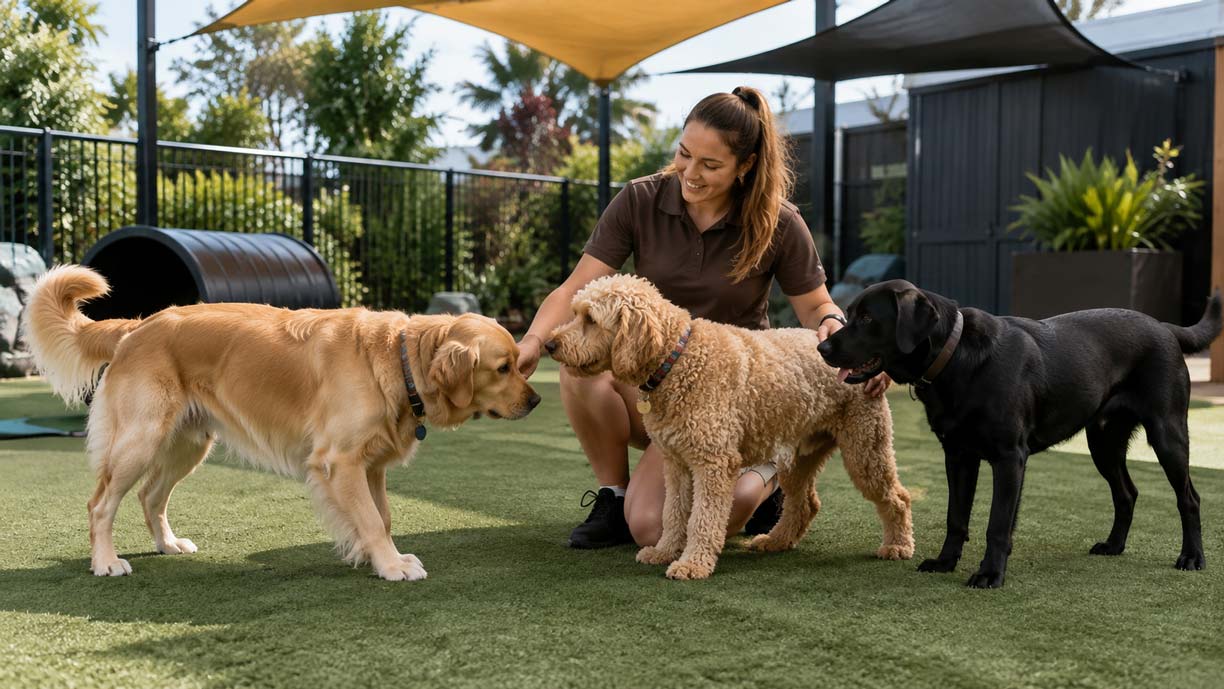
A first day is always a little unknown, which is why the right environment does so much of the work. Woofers runs supervised dog daycare in Melbourne across two locations, our Ormond HQ and the Dog Lounge in Moorabbin, both structured around real play, proper rest, and close supervision. As Glen Eira’s only government-approved and registered dog daycare, it’s an environment that’s been formally assessed, not just self-declared.
New dogs are settled in gently, watched closely, and matched into a group that suits them. If it’s your dog’s first time, the team is happy to talk you through the day and answer anything before you book.
The Bottom Line
Bring food, medication, a familiar comfort item and proof of vaccinations, and leave the high-value chews and long goodbyes at home. Pair a short list with a calm drop-off and a daycare that groups dogs with care, and your dog’s first day becomes the start of a routine they look forward to all week.
Ready to book your dog’s first day? Reserve a spot at Woofers daycare and see how quickly they settle in. Book Now!
Frequently Asked Questions About Your Dog’s First Day at Daycare
What should I bring on my dog’s first day at daycare?
Bring pre-portioned food, any labelled medication, a familiar comfort item, a well-fitted collar with ID, and proof of up-to-date vaccinations. Bowls and group toys are usually provided.
What vaccinations does my dog need for daycare?
Most daycares require core vaccinations plus kennel cough (C5) before your dog can attend. At Woofers, all onsite dogs must be vaccinated, so bring proof on or before day one.
How do I prepare my dog for their first day at daycare?
A short walk beforehand and a calm, brief drop-off help most. Choosing a daycare that assesses temperament and groups dogs by size and temperament also makes settling in far easier.
What should I not bring to dog daycare?
Leave high-value chews or bones at home, as they can trigger guarding in a group, along with fragile or expensive toys. A drawn-out goodbye is best skipped too.
Will my dog be okay on their first day at daycare?
Most dogs settle within a session or two. A supervised, structured environment where handlers group dogs thoughtfully and watch play closely helps nervous dogs relax quickly.
Most dogs need professional grooming every four to eight weeks, but the honest answer depends on your dog’s coat, lifestyle and the time of year. A short-haired Staffy and a curly-coated cavoodle live in the same city and have completely different grooming needs.
This guide breaks down how often to groom by coat type, what changes the schedule, and how to tell when your dog is overdue, so you can keep them comfortable rather than guessing.
Why Grooming Frequency Actually Matters
Grooming is easy to think of as a haircut, but for most dogs it is closer to basic maintenance. Regular sessions keep the coat free of matting, catch skin issues early, and keep nails at a length that does not affect how your dog walks. Leave it too long and small problems become uncomfortable ones. Matting pulls on the skin, overgrown nails strain the joints, and a neglected coat traps dirt and moisture against the skin.
Getting the timing right is not about appearances. It is about keeping your dog comfortable between visits and spotting anything unusual before it turns into a vet trip.
How Often to Groom by Coat Type
Coat type is the single biggest factor. Here is a realistic guide for the coats we see most often across Melbourne:
– Long or curly coats (oodles, poodles, spaniels): every four to six weeks. These coats grow continuously and mat quickly, so they need the most consistent schedule of any dog.
– Double coats (retrievers, huskies, shepherds): a full groom every eight to twelve weeks, with seasonal de-shedding in spring and autumn when the undercoat blows. Regular brushing between visits does most of the work here.
– Short coats (staffies, beagles, kelpies): every six to eight weeks is plenty. A bath, brush and nail trim keeps the skin healthy without much fuss.
– Wiry or terrier coats: every six to eight weeks, sometimes with hand-stripping depending on the breed and whether the coat is kept natural.
Age and lifestyle shift these numbers. A dog that swims, digs and hikes will need more frequent grooming than a mostly-indoor companion of the same breed.
What Else Changes the Schedule
Coat type sets the baseline, but a few things move it:
Season. Melbourne’s shift from a wet winter to a hot summer changes coat behaviour. Double coats shed heavily in the warmer months, and matted or overgrown coats trap heat when your dog can least afford it.
Activity level. Dogs that stay active through regular walks and outdoor play pick up more dirt and debris, and need dog grooming more often to keep the coat clean and tangle-free.
Skin sensitivity. Dogs prone to itchy skin or allergies often do better on a slightly more frequent, gentle schedule than their coat type alone would suggest.
Age. Senior dogs can find long sessions tiring, so shorter, more regular visits are kinder than one big overdue groom.
Signs Your Dog Is Overdue
You do not need a calendar to know when a groom is due. Your dog will tell you. Watch for a coat that feels rough or clumps when you run your hand through it, small mats forming behind the ears or under the legs, a lingering smell that a bath does not fix for long, or nails you can hear clicking on the floor. Scratching, licking or chewing at one spot can also mean the coat needs attention.
If you are seeing two or three of these, your dog is past due rather than approaching it.

Can You Over-Groom a Dog?
Yes, and it is worth saying plainly, because more is not always better. Bathing too often can strip the natural oils that keep skin and coat healthy, leaving the skin dry and itchy. Some coats, particularly double coats, are also easy to damage if they are clipped when they should be brushed and de-shedded instead.
The goal is the right schedule for your dog, not the most frequent one. A good groomer will tell you honestly if you are booking too often, not just take the booking.
A Calmer Grooming Experience at Woofers World
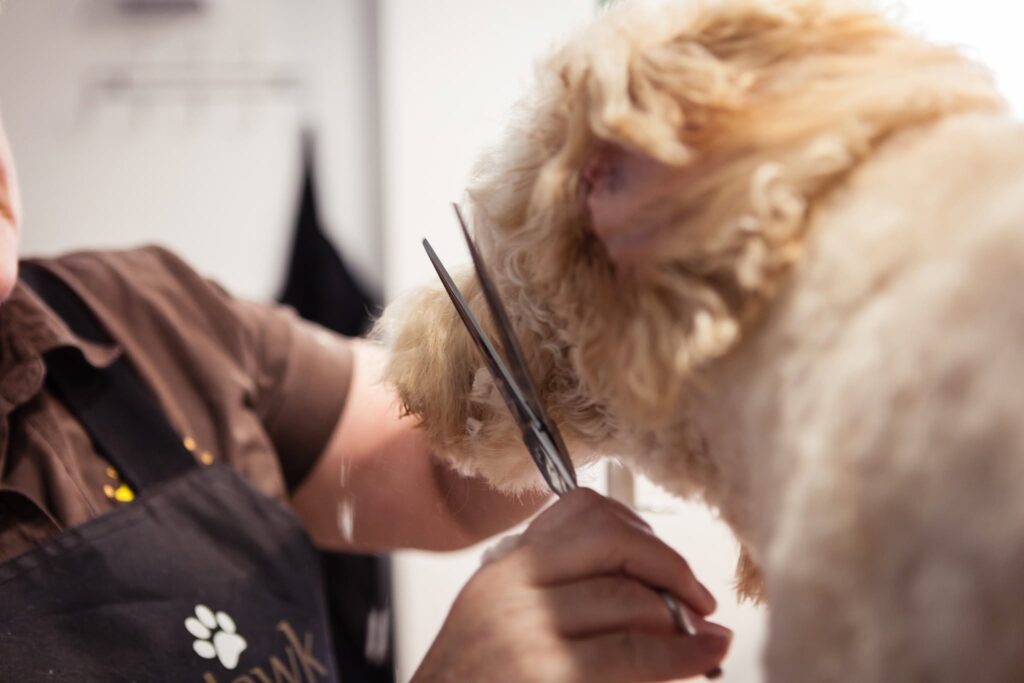
Where your dog is groomed matters as much as how often. At Woofers World, grooming happens in a free-range grooming salon designed to be calm and low-stress, rather than a row of crates. For nervous dogs, and for the seniors who find the whole thing tiring, that difference shows in how they settle.
Every groom includes nail trims and ear cleaning as standard, with no surprise extras added at pickup, and each dog is handled by trusted carers who have looked after Melbourne dogs since 2005. If your dog is due, or you are not sure how often their coat really needs attention, the team is happy to talk it through and set a schedule that suits your individual dog.
The Bottom Line
Most dogs land somewhere between four and eight weeks, with curly and long coats at the frequent end and short coats at the relaxed end. Use coat type as your starting point, adjust for season, activity and age, and let your dog’s coat and behaviour guide the rest. Get the rhythm right and grooming stops being a chore you keep putting off, and becomes simple maintenance that keeps your dog comfortable all year.

Frequently Asked Questions About Dog Grooming Frequency
How often should a dog be professionally groomed?
Most dogs need a professional groom every four to eight weeks. Long and curly coats sit at the four-to-six-week end, while short coats can stretch to eight.
How often should I groom a short-haired dog?
Short-coated dogs usually need a bath, brush and nail trim every six to eight weeks. Regular brushing at home in between keeps shedding and skin healthy.
Do dogs need grooming in winter?
Yes. Coats still grow, mat and trap moisture in winter, and skipping the colder months often leads to matting that is uncomfortable and harder to manage by spring.
Can you groom a dog too often?
You can. Bathing too frequently strips natural oils and can dry out the skin, so the right schedule for your dog’s coat is better than the most frequent one.
How do I know if my dog needs grooming?
Rough or clumping coat, small mats behind the ears or under the legs, a smell that returns quickly after a bath, and nails clicking on the floor are all signs a groom is due.
Dog daycare in Melbourne typically costs between $48 and $80 per day, depending on your dog’s size, the facility you choose, and the services included.
But there’s more to understand than just the daily rate. Some centres charge extra for add-ons that others include as standard. Some offer package deals that dramatically reduce costs. And some “cheaper” options might not provide the level of care your dog deserves.
This guide breaks down what you’ll pay for dog day care in Melbourne and how to get the best value.
Melbourne Dog Daycare Pricing Breakdown
- Standard Daily Rates
Based on current pricing across Melbourne facilities:
Small dogs (under 15kg): $48-65 per day. Medium dogs (15-25kg): $55-70 per day Large dogs (25-45kg): $58-75 per day Giant breeds (45kg+): $65-80 per day
These rates typically include supervised play, socialisation with other dogs, rest periods, and sometimes lunch if you bring food from home.
- Package and Multi-Day Discounts
Most dog daycare centres in Melbourne offer package deals that reduce your per-day cost significantly. Here’s what’s common:
5-day packages: Usually $60-65 per day (around 10% discount) 10-day packages: Usually $55-63 per day (up to 15% discount) 20-day packages: Usually $50-60 per day (up to 20% discount)
These packages typically expire within 6-12 months, so they work best if your dog attends regularly.
- Weekly Membership Options
Some facilities offer weekly membership structures instead of packages:
1 day per week membership: $60-70 per week 2-3 days per week: Additional days at $50-60 each Unlimited monthly passes: $340-400 per month (best for 5-day-per-week attendance)
Memberships are ideal if your dog goes to daycare consistently every week.
- Trial Days and First-Time Rates
Many Melbourne dog day care centres offer discounted trial days for new dogs:
Trial day rates: $35-50 (sometimes free with package purchase) Half-day sessions: $30-48 per session
Trial days help you assess whether your dog enjoys the environment before committing to regular attendance.
What’s Included in Dog Daycare Prices?
The variation in dog day care costs often comes down to what’s included as standard versus what costs extra. Here’s what to look for:
Standard Inclusions at Quality Facilities
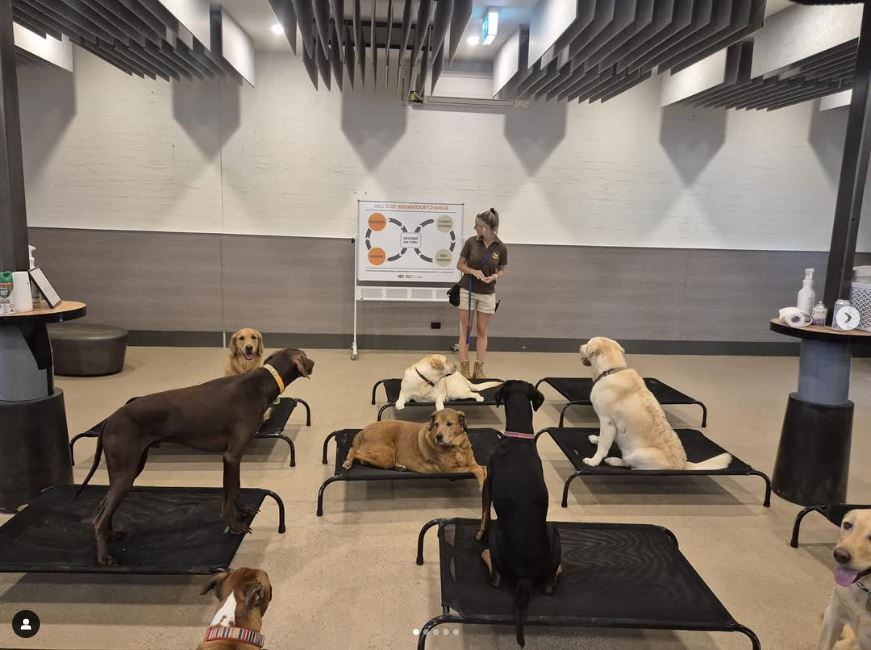
At reputable Melbourne dog daycare centres, your daily rate should include:
> Full-day supervised play and socialisation
> Multiple play sessions with appropriate rest breaks
> Separation by size, age, and temperament
> Climate-controlled indoor and outdoor areas
> Clean, sanitised facilities
> Professional staff trained in canine behaviour
> Daily health and wellbeing monitoring
> Photo updates throughout the day
If these basics aren’t included, you’re not getting good value regardless of the price.
Common Additional Costs
Services that typically cost extra include:
Grooming services: Bath and brush $35-60, full groom $60-150
Pick-up and drop-off: $15-30 each way depending on distance
Lunch and treats: $5-10 per day if not provided by owner
Training sessions: $20-50 per session
Medication administration: $5-15 per day
Nail trimming: $15-25
Some premium facilities include basic grooming services or lunch in their standard rate, so compare what’s actually included before judging value.
Why Dog Daycare Prices Vary in Melbourne
Several factors influence what you’ll pay for doggy daycare in Melbourne:
Location Within Melbourne: Inner-city facilities in areas like South Melbourne, Richmond, and Abbotsford tend to charge more due to higher rental costs. Suburban locations in Ormond, Moorabbin, or outer areas often offer more competitive pricing while maintaining the same quality standards.
Staff-to-Dog Ratios: Quality facilities maintain appropriate supervision ratios. Industry best practice is approximately one trained staff member for every 10-15 dogs. Facilities with better ratios may charge slightly more, but this directly impacts your dog’s safety and the quality of their experience.
Facility Quality and Amenities: Purpose-built dog day care centres with separate play areas, climate control, and specialised equipment typically charge more than basic facilities. These features significantly improve your dog’s comfort and safety, making them worth the investment.
Additional Programs and Services: Facilities offering enrichment activities, swimming pools, training programs, or specialised care for anxious or reactive dogs often have higher rates reflecting their expertise and equipment investment.
Is Dog Daycare Worth the Cost?
When Dog Daycare is Excellent Value
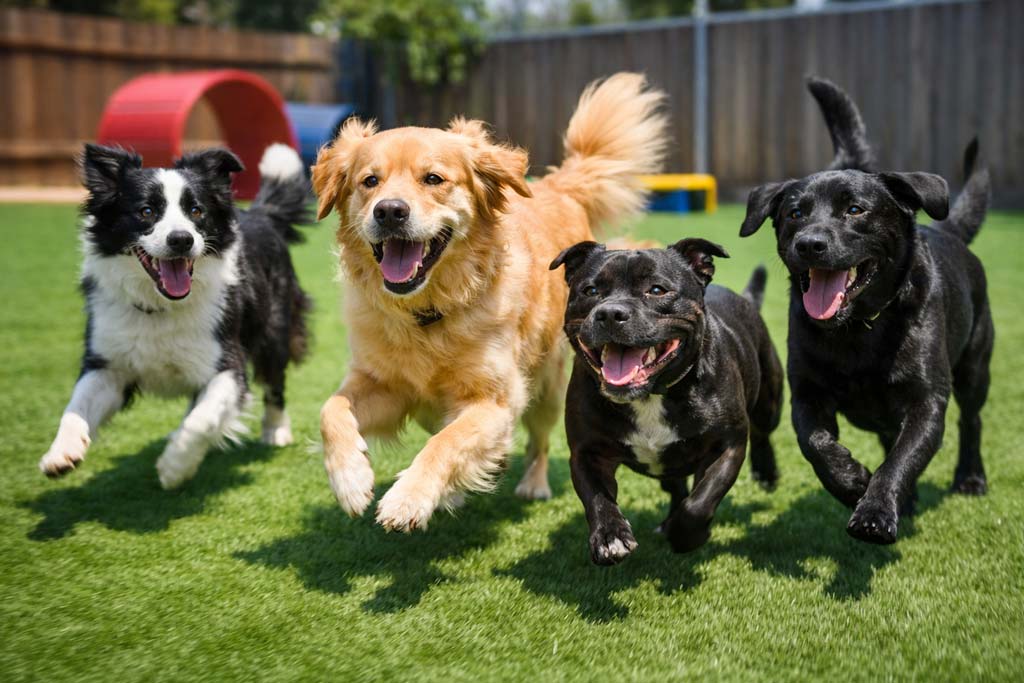
For destructive dogs: If your dog has caused significant damage at home from boredom or anxiety, the cost of daycare quickly pays for itself. Some owners report avoiding thousands in furniture and home repairs.
For high-energy breeds: Working breeds like Border Collies, Kelpies, and German Shepherds need extensive daily exercise. Daycare provides this at a fraction of what you’d pay for private dog walking services multiple times per day.
For socialisation: If your dog struggles with reactivity or fear around other dogs, quality daycare with proper supervision can be part of addressing these issues, potentially saving on one-on-one training costs.
For working professionals: The peace of mind knowing your dog is supervised, entertained, and safe while you work is invaluable to many owners.
How to Get the Best Value from Dog Daycare
Start with Fewer Days Per Week: Rather than jumping straight to five days per week, start with 2-3 days. Many dogs thrive on this schedule, and it’s significantly more affordable while still providing regular socialisation and exercise.
Buy Package Deals: If your dog attends regularly, package deals offer substantial savings. A 20-day package can save you $200-400 compared to casual daily rates.
Combine Services: Some facilities offer discounts when you combine services. For example, daycare plus grooming packages, or daycare with occasional overnight boarding.
Look Beyond the Daily Rate: Don’t choose solely based on price. Factor in location convenience, included services, staff qualifications, facility quality, and most importantly, whether your dog enjoys going. A cheaper facility your dog hates isn’t good value.
Ask About Referral Discounts: Many Melbourne dog daycare centres offer discounts for referring friends or multi-dog household rates if you have more than one dog.
Comparing Dog Daycare Costs to Alternatives
Private dog walking: $30-50 per walk (30-60 minutes) Home visit pet sitter: $25-45 per visit (30-60 minutes) Group dog walk: $20-35 per walk Full-day pet sitter at home: $80-150
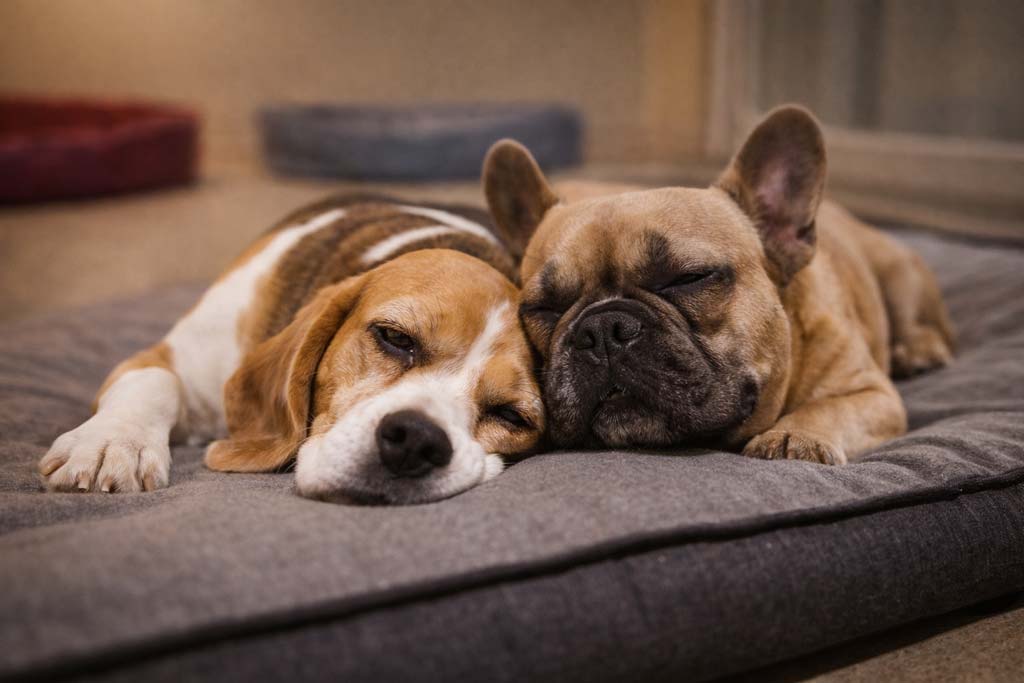
For full-day supervision, socialisation, and exercise, daycare often represents better value than multiple walks or home visits.
What You Should Expect for Your Money
Regardless of price, you should receive clean and safe facilities, well-trained staff who know your dog, regular photo updates, clear communication, proper health requirements, and immediate notification of any issues. If you’re not getting these basics, you’re not getting good value.
The Bottom Line on Dog Daycare Costs
Quality dog daycare in Melbourne costs $48-80 per day, with package deals reducing this to $50-65 per day for regular attendees. While this is a significant investment, it provides comprehensive care that would cost more if purchased separately.
Don’t automatically choose the cheapest option, but don’t assume the most expensive is best either. Visit facilities, ask questions, and trust your instincts.
Most importantly, watch your dog’s reaction. If they’re excited to go, tired and happy when they come home, and showing improved behaviour, you’ve found good value regardless of the exact price.
Frequently Asked Questions About Dog Daycare Costs
Is dog daycare tax-deductible in Australia?
Unfortunately, pet care costs, including dog daycare, are not tax-deductible for regular pet owners in Australia. However, if you have a registered assistance dog or use your dog for business purposes (such as security), you may be able to claim some expenses. Consult a tax professional for specific advice.
Do I pay for days my dog doesn’t attend?
This depends on the facility’s policy. Casual rates mean you only pay for days attended. Weekly memberships typically require payment regardless. Package deals allow flexibility within the expiry period.
Are there cheaper options for puppy daycare?
Puppies under 6 months sometimes receive discounted rates at certain facilities, particularly for puppy-specific socialisation programs. However, not all centres offer this. Puppy playgroups (shorter sessions) can be more affordable alternatives to full-day puppy daycare.
Can I negotiate dog daycare prices?
While most established facilities have fixed pricing structures, some offer flexibility for long-term commitments, multiple dogs, or if you’re experiencing financial hardship. It never hurts to ask, especially if you’re committing to regular weekly attendance.
What happens if I lose my job and can’t afford daycare anymore?
Speak to your daycare provider as soon as possible. Some may offer payment plans, allow you to pause packages, or reduce to fewer days per week. Many facilities want to maintain relationships with regular clients and may work with you during difficult times.
Is pet insurance cheaper than paying for daycare?
Pet insurance and dog daycare serve completely different purposes. Insurance covers veterinary treatment for illness and injury. Daycare provides daily care, exercise, and socialisation while you work. You can’t substitute one for the other.
How much does dog daycare cost per month in Melbourne?
For dogs attending 2-3 days per week, expect to pay $400-700 per month, depending on package deals and your dog’s size. Full-time daycare (5 days per week) typically costs $800-1,200 per month, though unlimited monthly passes can reduce this.
If you’re considering dog daycare in Melbourne, you’ve probably asked yourself this exact question. Maybe you’ve heard mixed opinions from friends, read conflicting advice online, or simply feel uncertain about whether leaving your dog in someone else’s care is the right decision.
The short answer? Yes, dog day care can be incredibly beneficial for dogs when it’s done properly. But like any pet care service, the quality of the experience depends entirely on the facility, the supervision provided, and whether your individual dog’s needs are being met.
Let’s explore what research, veterinary professionals, and canine behaviourists actually say about dog daycare, so you can make an informed decision for your furry family member.
The Research-Backed Benefits of Quality Dog Daycare
- Mental Stimulation Prevents Boredom and Destructive Behaviour
Dogs are intelligent, social animals that need mental engagement throughout the day. When left home alone for 8-10 hours, many dogs become bored, anxious, or frustrated, which often leads to destructive behaviours like chewing furniture, excessive barking, or digging.
Quality day care for dogs provides constant mental stimulation through:
Supervised play with other dogs
Rotating toys and enrichment activities
Different environments and sensory experiences
Structured group activities
Research from animal behaviour specialists shows that dogs experiencing regular mental stimulation display fewer anxiety-related behaviours and better overall emotional wellbeing.
- Physical Exercise Tailored to Your Dog’s Energy Level
Not all dogs need the same amount of exercise, but every dog needs some. Active breeds like Border Collies, Kelpies, and Labradors can require 2-3 hours of physical activity daily. For working professionals, providing this level of exercise during the week is nearly impossible.
Professional dog day care centres offer:
Multiple play sessions throughout the day
Appropriate exercise intensity for different breeds and ages
Safe environments for off-leash running and play
Structured activities that tire dogs out properly
A tired dog is a happy dog, and the physical exercise provided at daycare helps prevent obesity, joint problems, and behavioural issues stemming from pent-up energy.
- Crucial Socialisation with Other Dogs
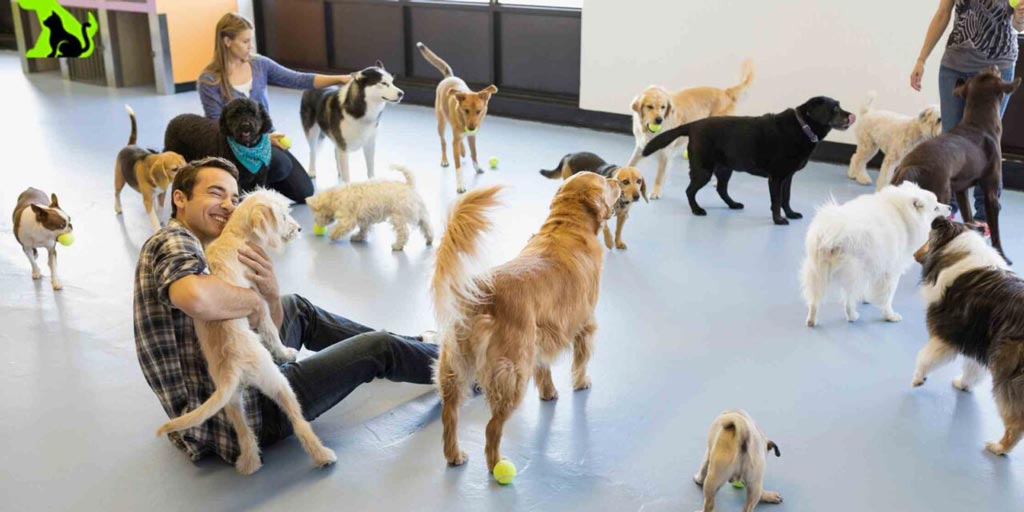
Socialisation isn’t just for puppies. Adult dogs benefit enormously from regular, positive interactions with other canines. Dogs are pack animals by nature, and many genuinely enjoy spending time with their own species.
At supervised dog day care facilities, your dog learns:
Appropriate play behaviour and boundaries
How to read canine body language
Confidence around different breeds, sizes, and temperaments
How to navigate social situations calmly
Dogs in daycare that attend regularly often become more confident, less reactive on walks, and better behaved around other dogs in public spaces.
- Reduced Separation Anxiety
Separation anxiety is one of the most common behavioural issues dog owners face. Dogs suffering from separation anxiety may bark excessively, destroy property, attempt to escape, or experience genuine distress when left alone.
Dog daycare can significantly help by:
- Providing companionship and supervision during your work hours
- Creating positive associations with your departure (they know they’re going somewhere fun)
- Reducing the total hours your dog spends alone each week
- Building confidence and independence in a safe environment
Many dog trainers recommend daycare as part of a comprehensive approach to managing separation anxiety.
- Professional Supervision and Safety
One of the biggest advantages of reputable dog daycare centres is the professional supervision your dog receives. Trained staff members understand canine behaviour, can identify signs of stress or overstimulation, and know how to intervene appropriately if play becomes too rough.
Quality dog day care centers also:
Separate dogs by size, age, and temperament
Monitor play groups constantly to prevent injuries
Provide rest periods to avoid over-excitement
Maintain strict health and vaccination requirements
This level of supervision simply isn’t possible when dogs are left alone at home or even in some informal walking groups.
When Dog Daycare Might Not Be Right for Your Dog
While doggy daycare offers tremendous benefits for many dogs, it’s not suitable for every animal. Being honest about your dog’s needs and temperament is crucial.
Dogs That May Struggle at Daycare
Highly anxious or fearful dogs: Some dogs find the busy, social environment of daycare overwhelming rather than enriching. If your dog is nervous around other dogs or new people, gradual introduction or alternative care might be better.
Elderly dogs with health issues: Senior dogs often prefer quieter environments with more rest time. While some daycare centres offer special programs for older dogs, a home visit service might be more appropriate.
Dogs with aggression issues: For safety reasons, dogs displaying aggressive behaviour toward other dogs or people typically aren’t suitable for group daycare settings. These dogs may benefit more from private dog walking or one-on-one care.
Highly unsocialised dogs: Dogs that have never been around other canines need careful, gradual introduction. Throwing an unsocialised dog straight into daycare can be stressful and potentially dangerous.
The Importance of Choosing the Right Facility
Not all dog day care centres are created equal. The quality of care varies dramatically between facilities, which is why choosing the right provider is absolutely essential. When searching for dog day care near me, don’t just pick the closest or cheapest option.
Warning signs of a poor-quality facility include:
Inadequate supervision (one staff member for 20+ dogs)
No separation by size or temperament
Dirty or poorly maintained facilities
No rest periods or quiet areas
Lack of transparency about their processes
On the other hand, excellent dog daycare providers will:
Welcome facility tours and questions
Require health checks and vaccinations
Conduct temperament assessments before acceptance
Maintain appropriate staff-to-dog ratios
Provide regular updates and photos to owners
Follow force-free, fear-free handling methods
What Veterinarians and Dog Trainers Say About Daycare
The professional pet care community generally views quality dog day care very positively. Veterinary behaviourists often recommend day care for dogs as part of treatment plans for various behavioural issues.
Dr Emma Goodman, a veterinary behaviourist in Melbourne, notes: “For working professionals with active breeds, quality daycare can prevent a multitude of behavioural problems. I see far fewer destructive behaviour cases in dogs that receive regular daycare compared to those left alone all day.”
Professional dog trainers also recognise the value of daycare, particularly for socialisation. Well-run facilities reinforce good manners and provide real-world practice for skills learned in training classes.
Making Dog Daycare Work for Your Dog
If you’ve decided daycare is right for your dog, here’s how to ensure a positive experience:
Start with a Trial Day
Most quality facilities offer trial days or half-day sessions. This allows your dog to experience daycare gradually and lets staff assess whether your dog enjoys the environment.
Watch how your dog behaves after their trial:
Are they relaxed and tired, or stressed and overstimulated?
Do they seem excited to return, or reluctant?
Are they showing any signs of stress like excessive panting, drooling, or hiding?
Begin with Part-Time Attendance
Rather than jumping straight to five full days per week, consider starting with 2-3 days. This gives your dog time to adjust while still providing the benefits of socialisation and exercise.
Many dogs thrive on a routine that includes some daycare days mixed with quieter days at home or with other care options.
Maintain Open Communication with Staff
Good daycare centres will keep you informed about your dog’s day, including:
How they interacted with other dogs
Their energy levels and mood
Any concerns or observations
Eating and drinking habits
Don’t hesitate to share information about your dog’s preferences, fears, or special needs. The more staff know about your dog, the better they can tailor their care.
Watch for Signs Your Dog Loves Daycare
Dogs that genuinely enjoy daycare will show clear signs:
Excitement when approaching the facility
Positive body language (wagging tail, loose posture)
Sleeping well after daycare days
Improved behaviour at home
No reluctance to enter the facility
If your dog seems stressed or unwilling to go, it’s worth discussing concerns with staff or considering alternative care options.
The Bottom Line: Is Dog Daycare Good for Dogs?

For the vast majority of healthy, social dogs with working owners, quality dog daycare is not just good, it’s excellent. The combination of exercise, mental stimulation, socialisation, and professional supervision addresses many of the challenges modern dogs face.
However, the keyword here is “quality.” The benefits of doggy daycare only apply when:
The facility is clean, safe, and properly staffed
Dogs are supervised constantly by trained professionals
Play groups are managed appropriately
Individual dogs’ needs and temperaments are considered
Staff use positive, force-free handling methods
If you’re considering dog daycare in Melbourne, take the time to visit facilities, ask questions, and trust your instincts. A reputable provider will welcome your questions and be transparent about their operations.
The right dog day care environment can transform your dog’s life, providing them with friendship, fun, exercise, and mental stimulation while you’re at work. For many dogs and their owners, it’s one of the best investments you can make in your pet’s wellbeing.
Ultimately, every dog is different. What matters most is finding a care solution that meets your individual dog’s needs, supports their physical and emotional health, and gives you peace of mind while you’re away.
Frequently Asked Questions About Dog Daycare
How many days a week should my dog go to daycare?
Most dogs thrive on 2-4 days of dog day care per week. This provides regular socialisation and exercise without over-tiring your dog. Full-time daycare (5 days) works well for high-energy breeds, while lower-energy dogs might prefer 1-2 days weekly. Consider your dog’s age, breed, and energy level when deciding frequency.
What age can puppies start dog daycare?
Puppies can typically start daycare once they’ve completed their initial vaccination series, usually around 16-18 weeks old. However, many quality facilities offer puppy-specific playgroups or puppy socialisation programs for younger pups in controlled environments. Early socialisation during the critical period (8-16 weeks) is crucial for lifelong confidence.
Will my dog be tired after daycare?
Yes, most dogs are pleasantly tired after a full day at daycare. The combination of physical exercise, mental stimulation, and social interaction is exhausting (in a good way). Your dog will likely sleep soundly that evening. If your dog seems overly stressed rather than happily tired, discuss this with daycare staff.
Can dog daycare help with separation anxiety?
Dog daycare can significantly help manage separation anxiety by providing companionship during your absence and reducing overall alone time. However, severe separation anxiety requires a comprehensive treatment plan that may include behaviour modification training, environmental management, and sometimes medication. Daycare should be one component of a broader strategy.
How do I know if my dog is happy at daycare?
Happy daycare dogs show enthusiasm when arriving at the facility, display relaxed body language during play, sleep well afterward, and show improved behaviour at home. Most quality facilities provide photo updates throughout the day. If your dog seems reluctant to enter the facility or shows signs of stress, address this with staff immediately.
Is dog daycare better than having a dog walker?
Both services offer different benefits. Daycare provides all-day socialisation, mental stimulation, and constant supervision, making it ideal for social, high-energy dogs. Dog walking offers shorter, focused exercise and works better for dogs who prefer one-on-one attention or can’t handle full daycare days. Many owners use a combination of both services.
What should I look for when choosing a dog daycare?
Key factors include: appropriate staff-to-dog ratios (ideally 1:10-15), clean and safe facilities, separation by size and temperament, rest periods, transparent operations that welcome tours, required health checks and vaccinations, trained staff using force-free methods, and regular communication with owners. Trust your instincts during facility visits.
Can aggressive dogs go to daycare?
Dogs displaying aggression toward other dogs or people typically aren’t suitable for group daycare environments for safety reasons. However, some facilities offer private play sessions or work with professional trainers to address behaviour issues. If your dog has aggression concerns, consult a qualified dog trainer or veterinary behaviourist first.
Will my dog get sick at daycare?
While quality facilities maintain strict health and vaccination requirements, any environment where dogs interact carries some risk of contagious illnesses like kennel cough. Reputable daycare centres minimise this risk through rigorous cleaning protocols, requiring current vaccinations, and monitoring dogs for illness signs. The benefits of socialisation typically outweigh the minimal health risks.
How much does dog daycare cost in Melbourne?
Dog day care charges in Melbourne typically range from $40-80 per day depending on the facility, location, and services included. Many centres offer multi-day packages or membership options that reduce the per-day cost. While doggy daycare is an investment, many owners find it worthwhile compared to the costs of treating anxiety, behaviour problems, or destructive behaviour resulting from boredom and isolation.
Proudly Associated With