



How To Choose A Dog Walker in Melbourne
September 4, 2026
Choosing someone to walk your dog is a big decision
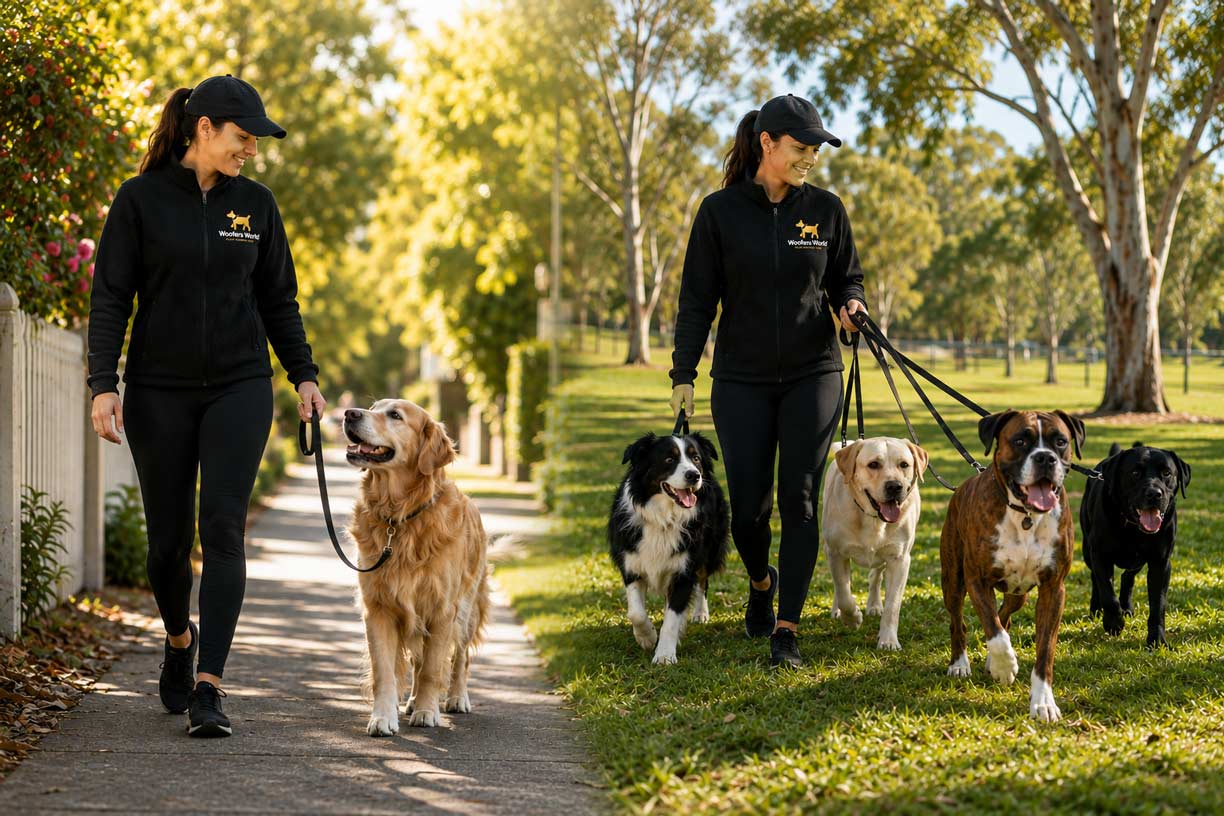
For many dogs, a walk isn’t simply about getting some exercise. It’s an opportunity to explore, sniff, socialise and spend some time away from home doing something enriching and enjoyable. When someone else is responsible for your dog during that time, it’s natural to want to know that they’re in safe, capable and experienced hands.
There are plenty of dog walking services available, so it can be difficult to know what to look for. Beyond the photos and the advertised walk duration, there are a few things that can give you a better understanding of how a service operates and what your dog’s experience is likely to be.
Handler Experience, Training and First Aid
A genuine love of dogs is a great place to start, but professional dog handling involves so much more than that. When choosing a dog walker, it can be helpful to ask about the experience and training of the people who will be caring for your dog.
Handlers should have a solid understanding of animal welfare, safe handling, husbandry and the relevant Codes of Practice relating to the keeping and care of animals.
Practical experience is important, but so is theoretical knowledge. Understanding why dogs behave the way they do can help handlers make better decisions when managing groups, introducing new dogs and responding to unexpected situations.
It’s also worth asking whether handlers participate in ongoing professional development. Animal care is an area where there is always more to learn, and continuing education helps handlers keep developing their knowledge and skills.
Animal first aid training is another valuable and extremely important consideration. Whilst we’d all hope it is never needed, knowing that your dog’s handler has the knowledge and training to respond appropriately in an emergency can provide an additional level of reassurance.
What a Dog Walking Van Should Have
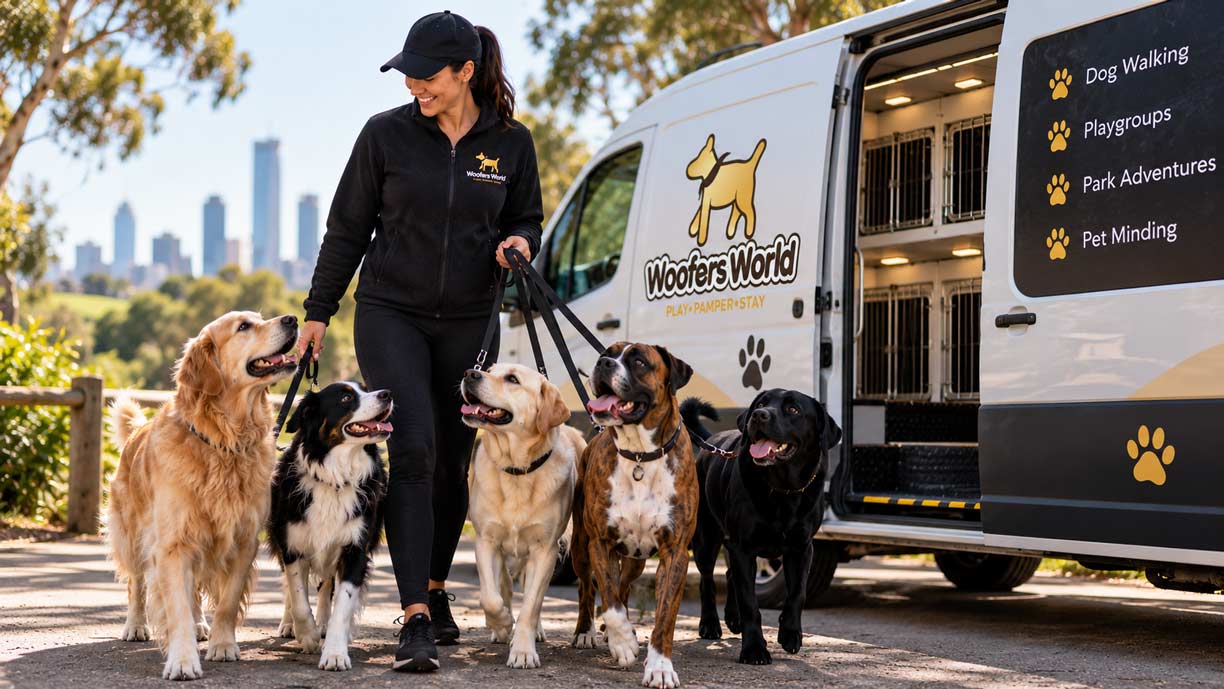
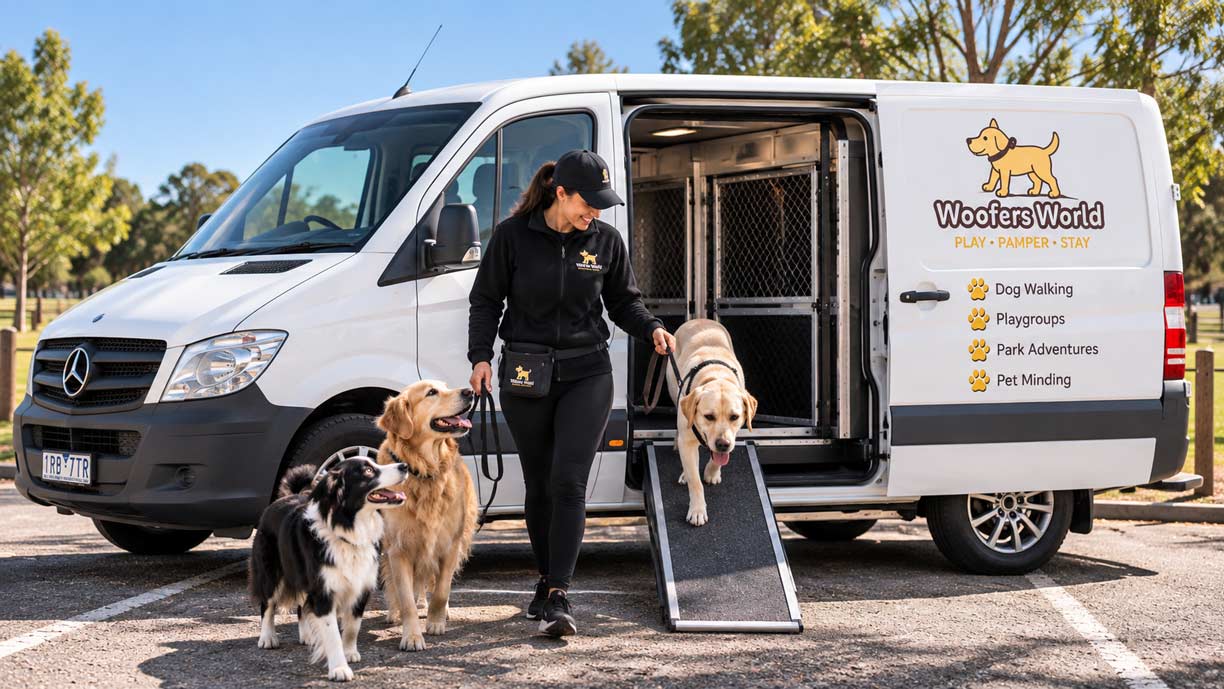
If your dog is travelling with a walking service, the vehicle becomes part of their experience too. A well equipped dog walking van should be secure, comfortable and designed specifically with animal transport in mind.
Features worth looking for can include:
- Secure physical barriers between dogs
- The ability to separate dogs when necessary
- Additional air conditioning
- Insulated walls and flooring
- Non-slip flooring
- Durable surfaces suitable for regular cleaning
- A layout that allows handlers to safely access the dogs
Hygiene is particularly important when several dogs share a vehicle.
Purpose designed rubber flooring, including curved edging that minimises difficult to clean joins and corners, can make thorough cleaning and disinfection much easier. Reducing the area that dirt, hair and contaminants can collect is an important part of good hygiene and reducing the risk of disease transmission between animals.
A consistent and high quality cleaning routine is an important part of maintaining a healthy environment for every dog travelling in the vehicle.
Insurance for Dog Walking Services
It can also be worthwhile asking what insurance a dog walking business carries. Public liability is an important part of operating a professional business, but businesses caring for animals should also have additional cover relating to the animals in their care. Care, custody and control cover is one example.
Nobody expects anything to go wrong, but knowing that appropriate insurance is in place can give you some extra peace of mind when you’re entrusting someone with a much loved member of your family.
How Dogs Are Matched Into Groups
Perhaps one of the most important questions is how a service decides which dogs walk together. Every dog is different.
Some are energetic and playful. Others prefer a slower pace. Some love socialising with other dogs, while others are happier with a little more space.
For that reason, a good group isn’t necessarily the largest group. Smaller groups can allow handlers to consider each dog’s temperament, energy level and social style when creating a group.
A group with a smaller number of compatible dogs can provide wonderful opportunities for socialisation and play whilst still allowing the handler to give each dog individual attention. This is the thinking behind our social dog groups in Melbourne, where dogs are placed by temperament and size rather than by how many spaces are left.
Ideally, dogs are matched because they are a good fit for one another, rather than purely because they live in the same vicinity.
The Meet and Greet and Assessment Walk
An assessment walk and a meet and greet is an important part of the introduction process.
It gives the handler an opportunity to meet your dog, learn about their personality and observe how they react to different situations. It will also help determine which existing group is likely to suit them best.
Often a new dog will be introduced to an established group with additional support from another handler. This gives the dog time to settle in with the undivided attention of a handler, without immediately expecting them to navigate an entirely new experience on their own.
The aim is to make the process as seamless, comfortable and as positive as possible.
Walk Quality Over Walk Duration
When comparing dog walking services, it’s easy to focus on how long your dog will be “out”. But the number of hours doesn’t necessarily tell you how enriching the experience will be.
A dog’s day can include travel, pick up and drop off time, as well as the walk itself. This is why we think it is more useful to consider what your dog is actually experiencing during their outing, rather than focusing solely on the amount of time they’re away from home.
For some dogs, a shorter, more thoughtfully planned adventure with the right group can be much more valuable than a longer outing spent travelling between numerous suburbs. That is how our group dog walking adventures are put together, with the ground chosen to suit the dogs in the van that day.
The goal is to make the time count. That might mean plenty of sniffing and exploration, social interaction, active play, or simply enjoying the environment at a pace that suits the group.
Service Area and Travel Time
The area a dog walking business covers can make a difference here too. A service that works within a defined area can generally keep collection and drop off routes more efficient. Less time spent travelling means more of the day can be dedicated to the dogs themselves. It is worth checking the Melbourne suburbs a walking service actually covers before you book, rather than assuming your street is on the run.
It also allows handlers to become familiar with their local area and build relationships with other pet professionals, including local vets, groomers and trainers. Ideally, a dog walking business should have veterinary and dog training connections within the areas they service.
Group Management on the Walk
Walking multiple dogs requires more than simply holding several leads. Handlers need to understand group dynamics and recognise how individual dogs influence one another. Energy can build within a group, and different combinations of dogs can create very different dynamics.
A skilled handler should be observing the group throughout the outing and adjusting their approach according to what the dogs need. This is another reason why smaller, carefully matched groups are beneficial. The aim isn’t to give every dog the exact same walk.
It is to create an outing that works for the dogs as a group, while still recognising them as individuals.
Team Support Behind the Handler
A dog walking business might look like one handler and a van from the outside, but having a reliable support network behind that handler can make a significant difference. Unexpected things can happen.
A vehicle can have a problem. A handler can fall ill. A dog may require some additional attention during an outing.
Having colleagues who can assist with pickups, drop offs or other unexpected situations helps create a more resilient service. It also means the handler isn’t required to manage every situation completely alone.
How Communication Should Work
Your dog’s handler will be focused on your dog while they’re out, which is exactly where their attention should be. That means they may not be able to answer a call or message immediately. Having a dedicated coordinator can be a useful way of making sure clients still have someone available for general enquiries, bookings and scheduling whilst handlers remain focused on the dogs.
At the same time, it is important that feedback about your dog during their walk is communicated consistently. If a handler notices something unusual, has a concern or learns something useful about your dog’s behaviour or preferences, it is important that information makes its way back to you.
Staff Continuity and Leave Cover
The people caring for your dog need time off too. A well run business should have systems around annual leave, illness and staff availability so that handlers can take proper breaks without leaving clients without support.
Having a wider team and clear processes can help provide continuity for dogs and their families whilst also allowing handlers to maintain a healthy work life balance.
Matching the Service to Your Dog
Perhaps the most important consideration is whether the service is actually suited to your dog. Think about your dog’s personality.
Do they like other dogs? Are they nervous in new environments? Are they energetic? Do they prefer a slower walk? Are they young and still learning about the world? Are they older and more comfortable at a gentler pace?
There isn’t one perfect type of dog walk. The “right” outing is the one that suits the individual dog. For dogs who are nervous, reactive, elderly or recovering, a private dog walk tailored to their pace will usually do more for them than any group session.
Whether that means a one-to-one outing or a small social group is worth thinking through before you book, and our guide to private dog walking versus group walks covers which dogs suit each.
A professional handler should be interested in getting to know your dog and understanding what makes them comfortable, happy and engaged.
What a Dog Walker Does Not Do
A dog walking service provides exercise, enrichment, supervision and care.
Whilst an experienced handler may have a good understanding of canine behaviour, dog walking isn’t the same as professional dog training.
If your dog has specific behavioural concerns or training needs, a qualified trainer or behaviouralist may be recommended alongside your walking service. Melbourne Dog Trainers handle that side for our clients.
Knowing what each professional is there to provide helps ensure your dog gets the right support from the right people.
Questions Worth Asking Before You Book
When choosing a dog walking service for your dog, don’t be afraid to ask questions. Find out about the people who will be caring for your dog, how they’re trained, how dogs are introduced and matched, what the transport is like, how groups are managed and what support exists behind the scenes.
Most importantly, consider whether the service seems genuinely interested in your dog as an individual. Ultimately, dog walking isn’t just about getting your dog from home, to the park and back again.
It’s about giving them the chance to explore, experience, socialise, move, sniff, learn and enjoy themselves, safely and in a way that suits who they are and what their preferences are.
FAQs About Choosing a Dog Walker
How do I choose a dog walker?
Ask about handler experience, training and animal first aid, how dogs are matched into groups, what the vehicle is like, what insurance is carried, and what support exists if a handler or van is unavailable. A service that answers those clearly, and asks questions about your dog in return, is usually the one worth booking.
How many dogs should one dog walker take at once?
Smaller groups allow a handler to watch each dog properly and adjust as the dynamic changes. A large group with one handler makes individual attention difficult and group management harder. Ask for the number rather than assuming, and ask how the dogs in that group were matched.
How long should a dog walk be?
Duration matters less than what happens during it. Advertised time often includes travel, pick-up and drop-off, so a shorter, well-planned outing with a suitable group can be more enriching than a longer one spent driving between suburbs. Ask what your dog will actually be doing, not just how long they will be out.
What insurance should a dog walker have?
Public liability is the baseline for any professional business, but a service caring for animals should also carry cover relating to the animals themselves, such as care, custody and control. It is a fair question to ask before booking and a professional service will answer it without hesitation.
Should a dog walker meet my dog before the first walk?
Yes. A meet and greet and an assessment walk let the handler learn your dog’s personality, see how they respond in different situations, and work out which existing group suits them. New dogs are often introduced with a second handler on hand so they are not navigating everything alone.
Is a dog walker the same as a dog trainer?
No. Dog walking provides exercise, enrichment, supervision and care. An experienced handler will understand canine behaviour, but behavioural concerns and training goals are the work of a qualified trainer or behaviourist alongside your walking service.
Related Articles
Private Dog Walking or Group Walks: Which Is Better for Your Dog?
Group walks suit social dogs with energy to burn. Private walks suit dogs who are nervous, senior, reactive or recovering. Here is how to tell whic...

Proudly Associated With